

Advance IT vs IT Block vs JK Technology: Which IT Provider Is Right for Your Clinic?

Choosing an IT provider for a clinic in Singapore is different from choosing IT support for a typical office.
Your computers and Wi-Fi still matter. But so do your Clinic Management System, patient information, backups, user access, cybersecurity, network availability, and the ability to keep operations running when something goes wrong.
And the stakes are increasing.
Under Singapore's Health Information Act (HIA), healthcare providers will progressively need to contribute specified health information to the National Electronic Health Record (NEHR) and implement mandatory cybersecurity and data security measures.
For GP and outpatient medical services, the implementation deadline is September 2027.
So if you are comparing Singapore IT providers such as Advance IT, IT Block and JK Technology, the question should not simply be: "Who can fix our computers?"
A better question is: "Which IT provider fits the way our clinic operates, the complexity of our infrastructure, and the cybersecurity requirements we need to prepare for?"
This guide compares the three providers using information publicly available as of September 2026.
Quick Answer: Advance IT vs IT Block vs JK Technology
All three are Singapore IT companies, but their publicly presented strengths differ.
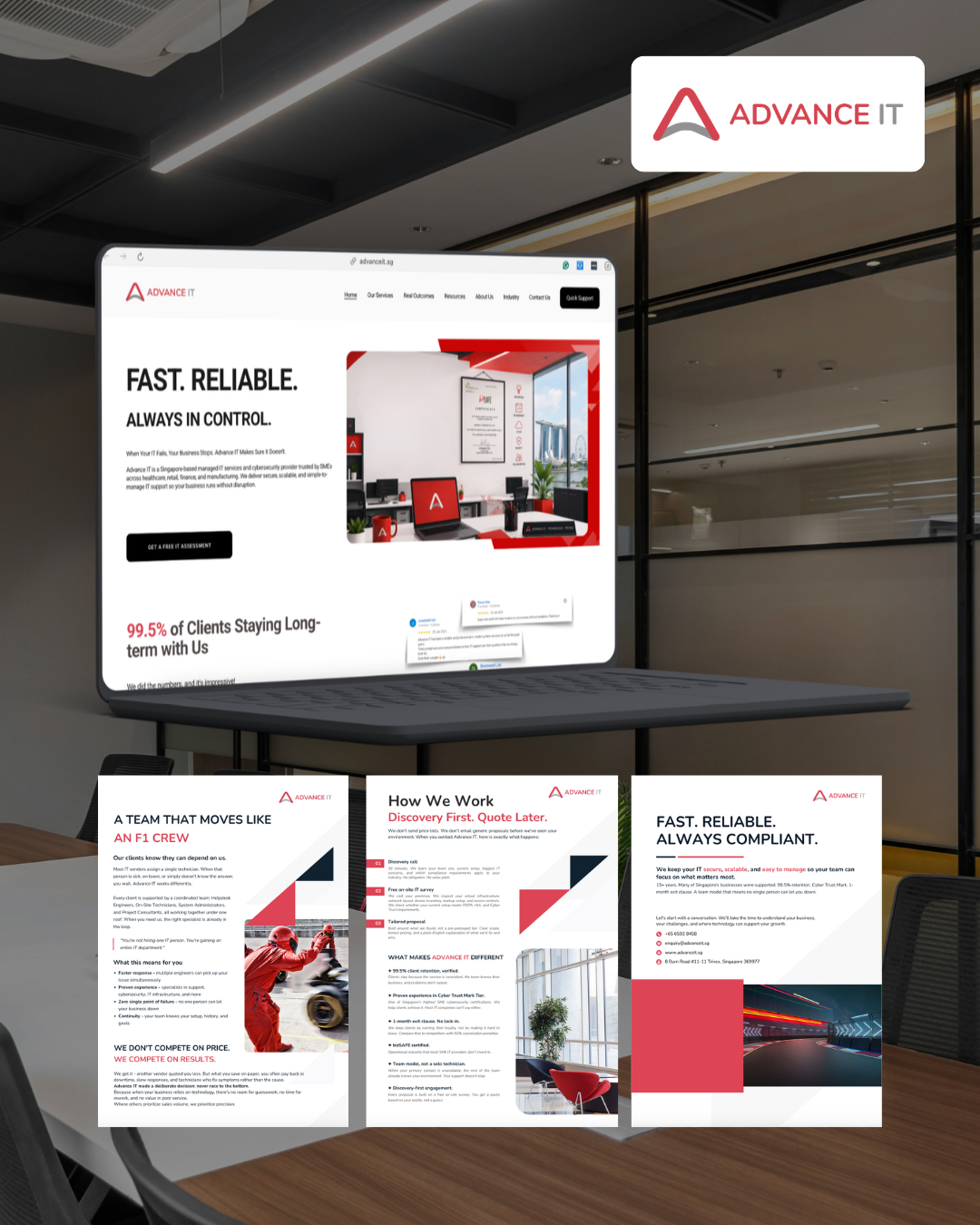
Advance IT positions itself around managed IT support, proactive maintenance, infrastructure and cybersecurity for Singapore SMEs, with healthcare specifically listed among the industries it supports. Its model emphasises a coordinated local team rather than relying on a single technician.
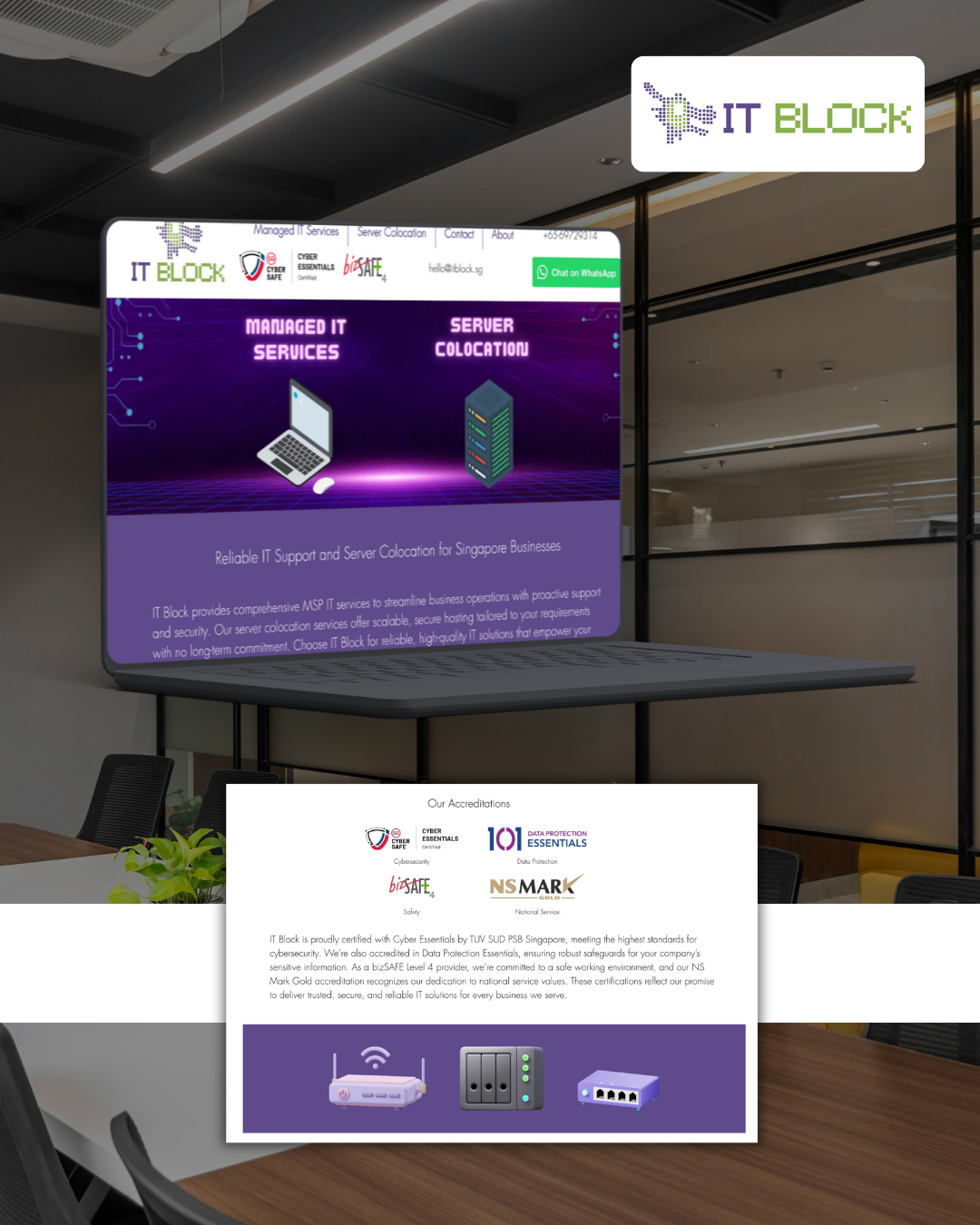
IT Block positions itself as a managed service provider offering IT support, cybersecurity, infrastructure management and server colocation. It also publicly states that it holds Cyber Essentials and Data Protection Essentials certifications.
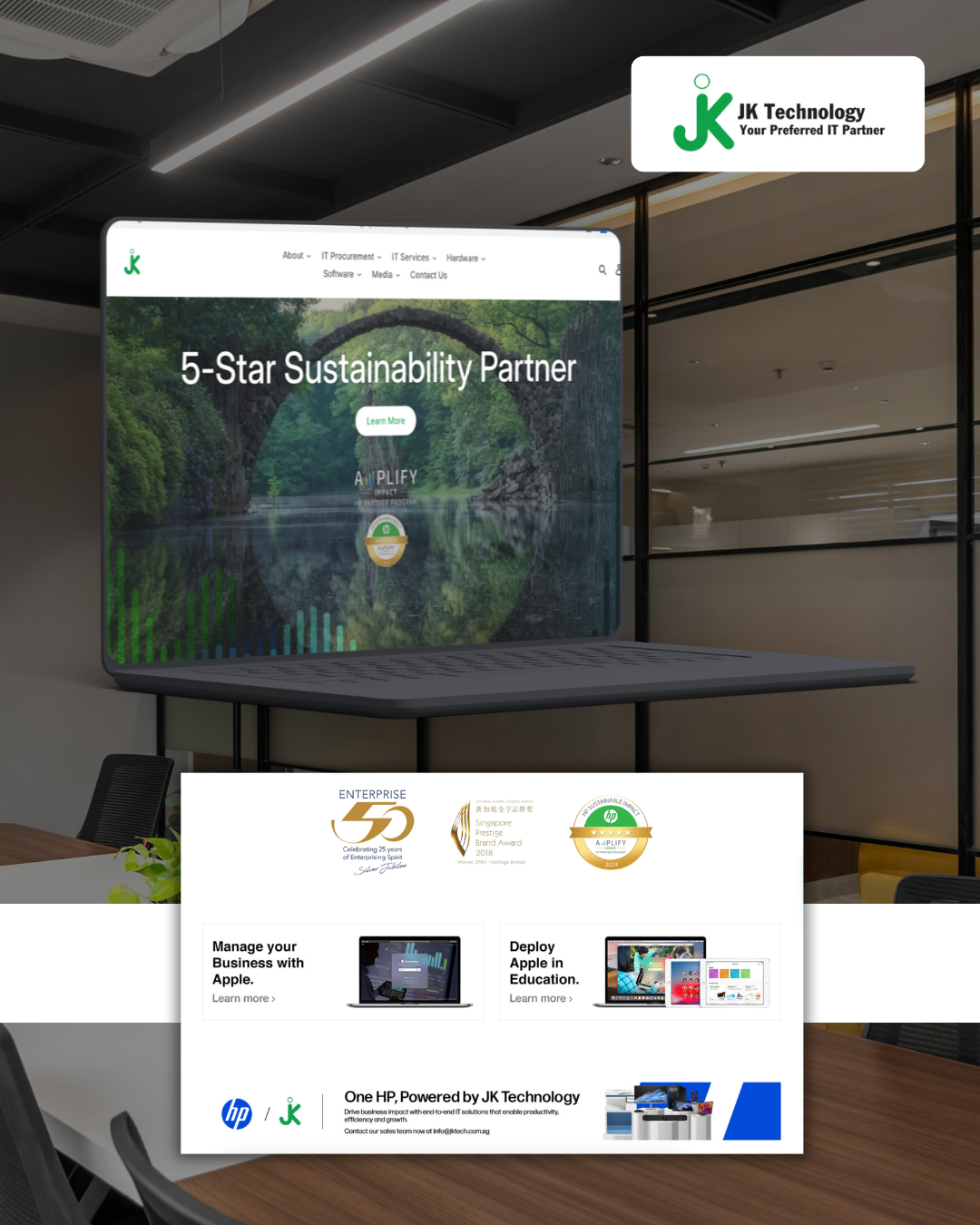
JK Technology is a larger and longer-established IT solutions provider with extensive hardware procurement, leasing, lifecycle management, infrastructure, cybersecurity and consulting capabilities. It states that it has served more than 3,000 companies and has more than 30 years of experience.
For a clinic, however, company size alone should not determine the decision.
The provider needs to fit your clinical environment, cybersecurity responsibilities, response expectations and ongoing IT management needs.
Why IT Support for a Singapore Clinic Is Different
A clinic may look like a small business from an employee-count perspective. Technically, it can be much more complicated.
A typical clinic may depend on: Clinic Management Systems or HIMS, Windows desktops and laptops, Microsoft 365 or other email systems, printers and scanners, internet connectivity, Wi-Fi, firewalls, shared storage, endpoint security, backup systems, medical devices, third-party applications, remote vendor access; and eventually, systems involved in contributing information to NEHR.
If the office printer fails, it is inconvenient. If the clinic loses access to critical systems or patient information during operating hours, the impact can be significantly greater. That is why clinics should evaluate IT providers based on operational continuity and cybersecurity, not simply the hourly cost of troubleshooting.
1. Advance IT: Managed IT Support With a Healthcare Focus
Advance IT has operated in Singapore for more than 15 years and provides IT support, managed IT services, infrastructure solutions, and cybersecurity services to SMEs.
Healthcare is specifically identified as one of the industries the company supports. For clinics, one of the more relevant differences is Advance IT's team-based support model.
Instead of positioning support around one assigned IT technician, Advance IT describes its model as a coordinated team consisting of:
Helpdesk Engineers;
On-Site Technicians;
System Administrators; and
Project Consultants.
Think of it like an F1 pit crew. Different IT problems require different expertise, but the clinic does not need to find a different vendor every time something changes.
What Advance IT provides
Its publicly listed IT services include:
remote helpdesk;
on-site support;
hardware and software support;
system monitoring and maintenance;
IT infrastructure audits;
network management;
backup and recovery;
cybersecurity;
cloud services;
servers and storage;
Microsoft 365-related support; and
Cyber Trust Mark readiness support.
Advance IT also states that its team is entirely Singapore-based.
Why this can matter for clinics
A clinic rarely needs only helpdesk support. For example, imagine that clinic staff suddenly experience intermittent access to a critical application. The cause could be: the workstation, Windows, Wi-Fi, the network, DNS, firewall configuration, server performance, user permissions, the application itself, or an external vendor.
Simply fixing the affected PC may not solve the root problem. Advance IT's model is designed around investigating the wider IT environment and coordinating different technical roles when necessary.
Proactive rather than purely reactive support
Advance IT also emphasises proactive maintenance. That distinction matters.
Traditional IT support often works like this: Something breaks → clinic calls IT → technician fixes it.
Managed IT works differently: Monitor → maintain → identify risk → remediate → support → review.
For clinics where downtime can interrupt daily operations, preventing recurring problems can be more valuable than repeatedly fixing the same issue.
Healthcare track record
Advance IT publicly displays testimonials from medical-sector clients, including a health-screening provider and a clinic operator. The company reports a 99.5% long-term client retention rate as of Q2 2026 across its active contracts, including clients in healthcare and other sectors.
That figure is company-reported rather than an independent industry benchmark, so clinics should still conduct their own due diligence.
2. IT Block: MSP Support With Cybersecurity and Colocation Capabilities
IT Block is another Singapore-based managed IT service provider. Its services include: managed IT, remote monitoring and management, cybersecurity, cloud solutions, IT infrastructure, IT procurement, server colocation, and ad-hoc support. IT Block also publicly states that its team operates exclusively in Singapore.
A notable cybersecurity strength
One visible differentiator is IT Block's own cybersecurity certification profile. The company states that it is certified in Cyber Essentials and accredited in Data Protection Essentials. For organisations evaluating vendors partly on their own security practices, these are relevant credentials to investigate.
Server colocation
Server colocation is another area prominently featured in IT Block's positioning. For businesses that need physical server hosting or specific colocation arrangements, this could be an important consideration. For a small cloud-first clinic, however, colocation may be less central to the decision than endpoint security, backup, identity management, network reliability and day-to-day support.
Service model
IT Block publicly describes an MSP model involving Master Service Agreements and Service Level Agreements. It offers different pricing approaches, including per-device, per-user and all-inclusive structures. It also advertises ad-hoc IT support alongside recurring managed services.
For clinics comparing providers, this makes it worth asking exactly what is included in the proposed SLA:
response time;
remote support;
onsite support;
monitoring;
cybersecurity;
backup management;
patching;
vendor coordination; and
escalation.
3. JK Technology: Broad IT Procurement and Enterprise Technology Capabilities
JK Technology has a substantially broader procurement and technology-lifecycle positioning. The company states that it has more than 30 years of experience and has served 3,000+ companies, including SMEs, government organisations and educational institutions.
Its offering covers areas such as:
IT hardware;
procurement;
leasing;
equipment rental;
lifecycle management;
helpdesk outsourcing;
system integration;
networking;
cloud computing;
cybersecurity;
server colocation;
migration;
IT consultancy; and
system engineering.
JK Technology also states that it provides 24/7 expert technical support.
Hardware procurement is a major strength
If an organisation needs to procure and manage large numbers of:
laptops;
desktops;
servers;
networking equipment;
displays;
conferencing equipment; or
other enterprise hardware,
JK Technology's extensive technology-partner ecosystem is particularly relevant. The company also highlights Apple and Microsoft authorised relationships.
Cybersecurity capabilities
JK Technology offers a broad cybersecurity portfolio covering areas including:
cloud security;
data-centre security;
network security;
endpoint security;
privileged-access management; and
infrastructure auditing.
Its consulting services also cover infrastructure assessment, solution design, implementation and ongoing optimisation. For larger healthcare organisations or groups with substantial procurement and infrastructure requirements, these capabilities may be important factors to explore.
The Bigger Question: Which Provider Understands Your Clinic?
This is where a generic feature comparison becomes less useful. All three companies can provide IT services. But clinics should ask a different set of questions than an ordinary SME.
-
Singapore's Health Information Act was enacted on 3 February 2026.
Under the HIA, healthcare providers must progressively meet requirements covering health-information contribution, access and protection.
For GP / Outpatient Medical Service providers, the current implementation timeline requires them to begin contributing applicable information to NEHR and implement the required cybersecurity and data-security measures by September 2027.
This means your IT conversation should now include questions such as:
What systems contain health information?
Which users have access?
Are privileged accounts properly controlled?
Is MFA implemented where required?
Are endpoints securely configured?
Are backups protected and tested?
How is remote access controlled?
Are security logs available?
How are employees onboarded and offboarded?
How are vulnerabilities and patches managed?
What happens during a cybersecurity incident?
Who coordinates with your HIMS or CMS provider?
An IT provider does not replace the clinic's legal or regulatory responsibilities.
But the provider can play an important role in implementing and maintaining the technical environment supporting those responsibilities.
-
Your IT provider and your HIMS vendor are not necessarily the same company. That distinction matters.
Under the HIA framework, HIMS vendors supporting healthcare operations and NEHR connectivity have specific requirements. MOH states that HIMS vendors must meet applicable NEHR connectivity requirements as well as governance and security requirements. Meanwhile, your clinic still has its own IT environment surrounding that system. For example:
HIMS vendor
→ Clinic application
→ HIMS functionality
→ NEHR integration
→ HIMS-specific requirementsClinic IT provider
→ Computers
→ Windows
→ Network
→ Firewall
→ Wi-Fi
→ Microsoft 365
→ Endpoint protection
→ User accounts
→ Backup
→ Remote access
→ IT monitoring
→ Day-to-day troubleshootingThese responsibilities overlap. Your IT provider should therefore be comfortable coordinating with your HIMS vendor instead of responding: "That's the software vendor's problem."
For a clinic, vendor coordination should be part of the IT support discussion.
-
This is one of the simplest ways to evaluate an IT provider. Ask each provider: "If our clinic suddenly cannot access a critical application during operating hours, what happens next?"
Then listen carefully.
Who answers the ticket? Who investigates the workstation?
Who checks the network? Who checks the server or cloud connection?
Who contacts the application vendor? When is an onsite engineer dispatched? Who owns the issue until it is resolved?
This tells you much more about an IT company than a long list of technology logos.
-
Small businesses often depend heavily on one IT person. That can work - until that person is:
unavailable;
already at another client;
on leave;
unfamiliar with the issue; or
unable to handle a specialist problem.
This is why Advance IT deliberately uses a team model. A clinic engaging Advance IT is supported through different technical functions rather than relying solely on one generalist.
For larger providers such as JK Technology, clinics should similarly clarify how the account is actually serviced: who handles helpdesk tickets, escalation, onsite work and account management.
With IT Block, clarify how tickets move through its MSP support and escalation process.
Do not only ask how many employees the IT company has.
Ask: "Who will actually support our clinic when something goes wrong?"
-
Suppose a clinic's firewall has outdated firmware. Nothing has failed yet.
A reactive provider may never touch it. A managed IT provider should have processes capable of identifying risks before they become incidents.
The same applies to:
outdated Windows devices;
failing storage;
backup failures;
security alerts;
expiring licences;
old network equipment;
unpatched software; and
inappropriate user access.
For clinics, the goal should increasingly be: fewer emergencies, not simply faster emergency repairs.
-
"Managed IT support" can mean very different things between providers. One quotation might include only remote helpdesk. Another might include:
remote helpdesk;
onsite support;
monitoring;
maintenance;
patching;
endpoint protection;
backup management;
Microsoft 365 administration;
vendor coordination;
network management;
IT documentation; and
cybersecurity reviews.
That is why comparing only:
Provider A: S$X/month
versus
Provider B: S$Y/month
can be misleading.
Instead, compare scope against scope.
A Better Checklist for Comparing Clinic IT Providers
Before signing an IT support contract, ask every provider these questions.
Support
What are your support hours?
What is your SLA?
What counts as a critical incident?
How quickly do you respond?
Is remote support included?
Is onsite support included?
Is there a limit on tickets?
What happens when the first technician cannot solve the problem?
Infrastructure
Do you manage our network and firewall?
Do you maintain servers?
Do you support Microsoft 365?
Do you manage backups?
Do you monitor devices?
Do you manage patching?
Do you maintain IT documentation?
Cybersecurity
Do you perform cybersecurity assessments?
How do you manage endpoint security?
How do you manage administrator accounts?
Can you implement MFA and access controls?
How do you secure remote access?
How do you test backup recovery?
How would you support us during a cybersecurity incident?
Healthcare
Have you supported clinics before?
Are you familiar with HIA CS/DS requirements?
Can you work with our HIMS vendor?
Can you help identify gaps before September 2027?
How do you handle systems containing patient information?
Can you document our IT environment and responsibilities?
The answers should form part of your provider evaluation.
So, Which IT Provider Is Right for Your Clinic?
There is no universal answer because the three providers emphasise different capabilities.
Consider Advance IT if: Your clinic wants an ongoing IT partner that combines day-to-day support, proactive maintenance, infrastructure and cybersecurity under a coordinated team model. This is particularly relevant for small-to-medium clinics that do not have an internal IT department but still need multiple technical skill sets.
Advance IT's existing healthcare client experience and emphasis on managed support make it worth evaluating where clinic operations and ongoing IT management are the priority.
Consider IT Block if: You are looking for an MSP with managed IT and cybersecurity capabilities and value a provider that publicly holds Cyber Essentials and Data Protection Essentials credentials. Its server-colocation capability may also be relevant for organisations with specific hosting or physical infrastructure requirements.
Consider JK Technology if: Your organisation has substantial hardware procurement, leasing, device lifecycle, infrastructure, or broader enterprise technology requirements. Its scale, technology ecosystem and long operating history can be particularly relevant to larger organisations with extensive procurement or infrastructure projects.
What About a Small GP Clinic?
Consider a clinic with:
10 employees;
8 Windows PCs;
one Clinic Management System;
Microsoft 365;
one firewall;
clinic Wi-Fi;
printers;
patient information;
cloud applications; and
no internal IT employee.
Does it necessarily need a huge enterprise technology ecosystem? Probably not. Does it need someone who can manage: users + devices + network + Microsoft 365 + security + backups + vendors + support + ongoing maintenance?
Absolutely. This is where the service model matters more than the provider's overall size. For many smaller clinics, the ideal IT partner functions almost like an outsourced IT department.
What About a Multi-Clinic Medical Group?
The requirements change when you operate multiple locations.
A medical group might have:
multiple clinic networks;
dozens or hundreds of endpoints;
shared Microsoft 365 infrastructure;
centralised applications;
different HIMS integrations;
site-to-site connectivity;
centralised cybersecurity;
multiple vendors;
standardised device configurations; and
more complex business-continuity requirements.
In that situation, ask potential providers about:
multi-site monitoring;
standardised infrastructure;
centralised identity management;
network architecture;
endpoint management;
access control;
backup strategy;
incident response;
vendor management;
hardware lifecycle;
documentation; and
scalability.
The cheapest monthly helpdesk quotation may not represent the lowest operational risk. HIA Makes This Decision More Important in 2026-2027. For GP clinics, September 2027 may sound far away.
It isn't.
MOH's current implementation schedule states that Outpatient Medical Service (GP) providers must start contributing applicable information to NEHR and implement the relevant Cybersecurity and Data Security measures by September 2027. The NEHR Connect Grant is already open for eligible GP providers, with applications having opened on 1 July 2026 and the current application deadline set at 31 August 2027.
This makes late 2026 a good time to ask: What does our current IT environment actually look like? Where are our cybersecurity gaps? Which systems need upgrading? Are our backups reliable? Are user accounts properly controlled? Is our HIMS ready? Who owns each part of our cybersecurity environment?
And is our current IT provider prepared to support us through these changes?
Frequently Asked Questions
-
There is no single provider that fits every clinic. Clinics should compare healthcare experience, helpdesk and onsite support, cybersecurity capability, infrastructure management, HIA familiarity, vendor coordination, SLA and ongoing maintenance rather than selecting a provider based only on price.
-
Look for remote and onsite support, proactive monitoring, cybersecurity, backup and recovery, network management, Microsoft 365 support, endpoint management, documentation and the ability to coordinate with your Clinic Management System or HIMS vendor.
For Singapore clinics, familiarity with HIA cybersecurity and data-security requirements is increasingly important.
-
Yes.
HIA requires regulated healthcare providers to implement applicable cybersecurity and data-security measures. Your IT provider may be responsible for implementing or maintaining some of the systems and controls supporting those requirements.
However, engaging an IT provider does not transfer the clinic's regulatory responsibilities to that provider.
-
Under the current MOH implementation schedule, Outpatient Medical Service (GP) providers are required to begin applicable NEHR contribution and implement cybersecurity and data-security measures by September 2027.
-
No.
Your HIMS provider and IT support provider may be separate organisations.
What matters is that responsibilities are clearly defined and the two providers can coordinate where their systems overlap.
-
Ad-hoc support can be appropriate for businesses with very limited IT requirements.
For clinics dependent on digital systems and patient information, managed IT provides the opportunity for ongoing monitoring, maintenance, cybersecurity and documentation rather than waiting for systems to fail before calling for help.
The appropriate model depends on the clinic's size, systems and risk profile.
-
Yes. Advance IT supports healthcare organisations in Singapore and provides helpdesk, remote and onsite IT support, infrastructure management, cybersecurity, backup, Microsoft 365 and managed IT services.
-
No. Advance IT does not advertise 24/7 support.
Its model focuses instead on contracted, ongoing IT management and proactive maintenance designed to reduce preventable downtime. Clinics requiring overnight or 24/7 support should discuss their required service window and escalation arrangements before signing an agreement.
Not Sure Whether Your Clinic's IT Is Ready for 2027?
You don't need to change IT providers just because HIA is approaching. Start by understanding where you stand. Advance IT can review your clinic's existing IT environment, including:
computers and Windows systems;
Microsoft 365;
network and Wi-Fi;
firewall;
user accounts and access;
endpoint protection;
backup and recovery;
patching;
remote access;
IT documentation;
cybersecurity gaps; and
coordination points with your HIMS or Clinic Management System provider.
From there, we can identify what is working, what presents a risk, and what should be prioritised before 2027.
Book a 30-Minute Clinic IT Consultation
Talk to Advance IT about your current environment and get a clearer picture of the IT and cybersecurity areas your clinic should prioritise before September 2027.
Advance IT Services Pte Ltd
With over 15 years of experience and a strong focus on IT support and Managed IT, we’re proud that 99.5% of our customers stay with us long-term.
‣ Website: https://www.advanceit.sg/
‣ Address: 8 Burn Road, #11-11 Trivex Singapore 369977
‣ Email us at: contact@advanceit.sg
‣ Call our team: +65 6592 8458




Comparing Advance IT, IT Block and JK Technology for a Singapore clinic? Compare IT support, cybersecurity, infrastructure, healthcare experience and HIA readiness before choosing.