

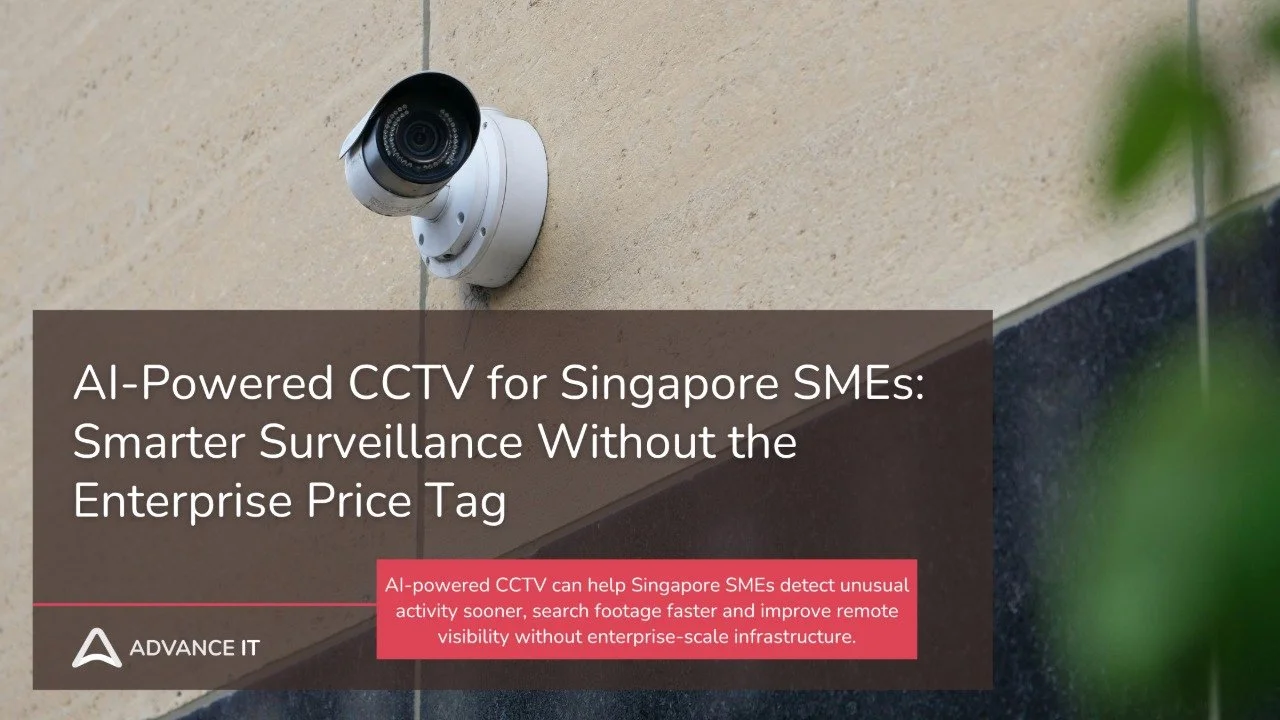
AI-Powered CCTV for Singapore SMEs: Smarter Surveillance Without the Enterprise Price Tag
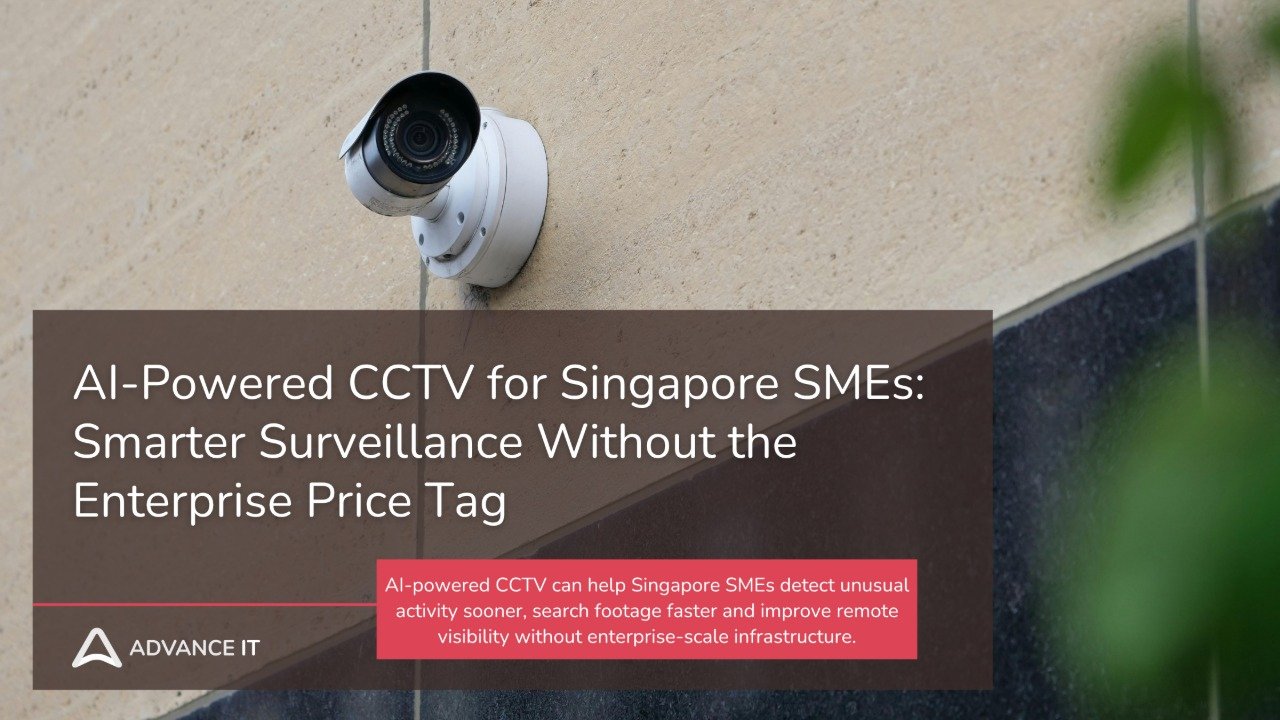
Traditional CCTV mainly records what happened. Someone reviews the footage after an incident, finds the relevant time period and works out what took place. AI-powered video surveillance can make that process more useful by analysing footage as it is captured. Depending on the system, analytics may identify movement in a restricted zone, count people, detect unusual activity or send an alert when defined conditions are met.
For Singapore SMEs, this creates useful automation without enterprise-scale infrastructure.
What Makes CCTV “AI-Powered”?
In many systems, video analytics runs on the camera, a local recorder or a cloud platform.
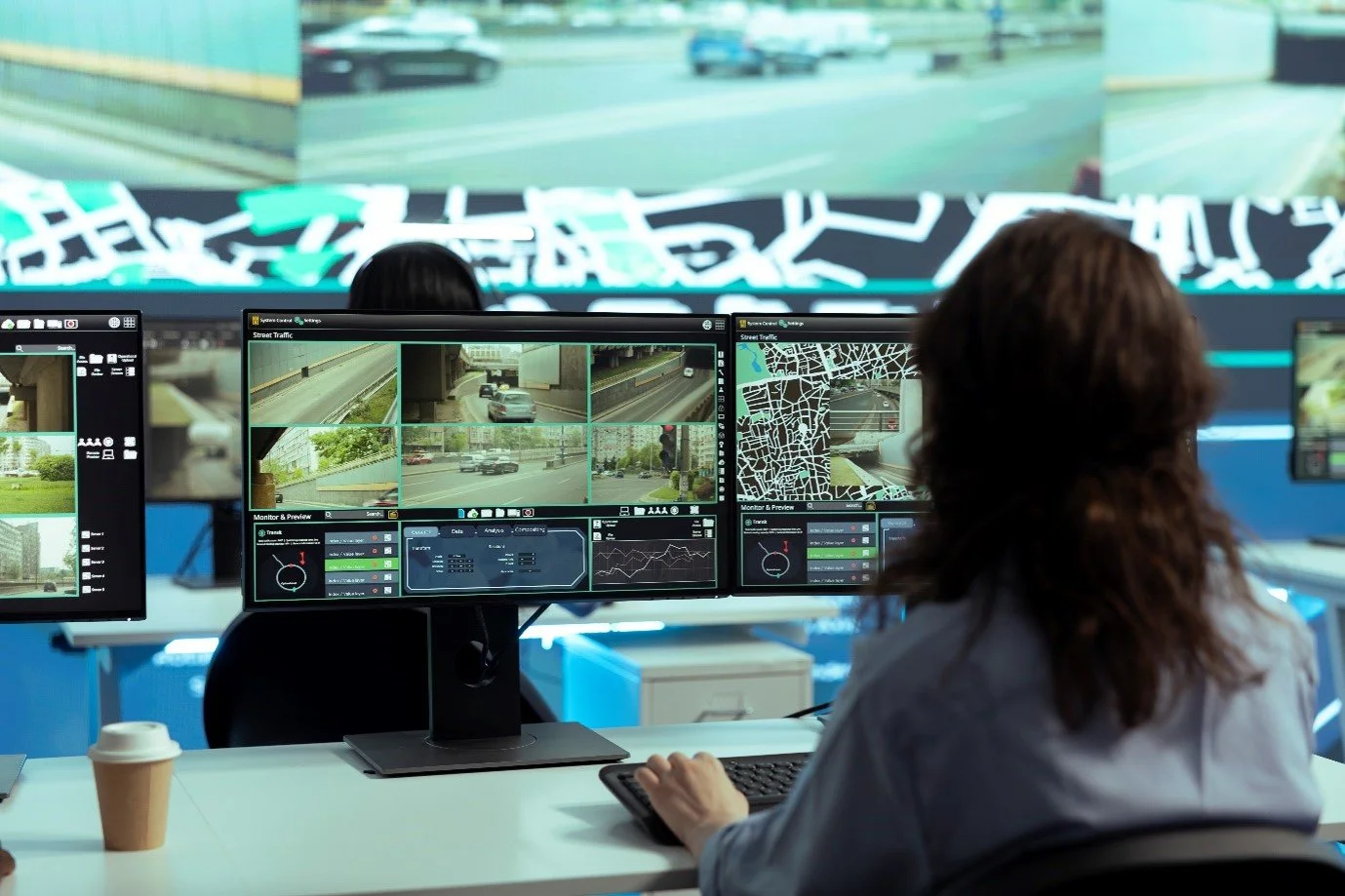
The software can be configured to look for specific events. A warehouse may create an alert if movement is detected near a loading area after operating hours. A retailer may use people counting to understand busy periods. An office may monitor an entrance without requiring someone to watch screens continuously.
The value comes from turning hours of footage into events that staff can review quickly.
Start With Specific Problems
A common mistake is buying the most feature-rich system available. A better approach is to identify two or three problems first. A retailer might want after-hours alerts, while a warehouse may need better coverage of loading bays and restricted areas.
Once the use case is clear, the company can choose cameras, storage and analytics that fit the requirement instead of paying for features it will never use.
Existing Infrastructure May Be Reusable
AI surveillance does not always require replacing every camera.
If an SME already uses compatible IP cameras with sufficient image quality, some systems can add analytics through a new recorder, edge device or cloud platform. Whether this works depends on camera compatibility, network capacity and the type of analytics required.
That makes phased upgrades possible: start with high-priority cameras and expand only if the system proves useful.
Practical AI CCTV Uses for SMEs
AI-supported surveillance can be useful for intrusion alerts outside business hours, restricted-zone monitoring, people counting, faster searches through recorded footage and remote health monitoring that flags an offline camera.
Accuracy varies with lighting, camera angle and crowding, so important decisions should not depend solely on automated alerts.
AI should help staff identify events that deserve attention rather than remove human judgement completely.
Privacy Must Be Designed Into the System
CCTV footage can involve personal data, so surveillance is not only a hardware decision.
Singapore’s Personal Data Protection Commission explains that the PDPA governs organisations’ collection, use and disclosure of personal data for legitimate and reasonable purposes. Its CCTV guidance addresses the handling of video footage, while a 2025 PDPC decision involved a member of the public requesting access to CCTV footage.
SMEs should consider why footage is collected, who can access it, how long it is kept and how stored video is protected.
More advanced functions may require additional care. PDPC has separate guidance on the responsible use of biometric data in security applications.
Cybersecurity Matters Because Modern CCTV Is Connected
Network cameras are IT devices. Weak passwords, outdated firmware or poorly secured remote access can create security risks.
Businesses should ask how administrator accounts are protected, how updates are handled and whether remote access uses strong authentication. Access rights should be removed when employees or vendors no longer need them.
Security System Company Singapore
How to Keep the Project Affordable
SMEs do not need to copy an airport or multinational office.
Costs can be controlled by prioritising high-risk locations, reusing compatible cameras where appropriate, choosing analytics for specific use cases, setting sensible recording periods, piloting the system before a full rollout and using scalable licences.
IMDA reported that AI adoption among Singapore SMEs rose from 4.2% to 14.5%, showing broader uptake of AI-enabled tools.
For CCTV projects, however, the technology should still solve a clear operational or security problem rather than being adopted simply because it includes AI.
What to Ask a Security Provider
When comparing a Security System Company Singapore SMEs should look beyond camera resolution.
Ask why each camera is positioned where it is, which analytics will be enabled, how false alerts will be managed, where footage will be stored, how long recordings will be retained and who can access the system remotely.
Maintenance matters as well. Firmware updates, camera-health monitoring and ongoing technical support should be discussed before installation rather than after a camera stops working.
The system should also be capable of expanding if the SME later adds another office, warehouse or outlet.
Conclusion
AI-powered CCTV can help Singapore SMEs detect unusual activity sooner, search footage faster and improve remote visibility without enterprise-scale infrastructure.
Camera placement, cybersecurity, privacy, data retention and human review still matter as much as the AI features.
For most SMEs, the sensible path is to start small, measure whether the alerts are genuinely useful and expand only where the system delivers practical value.



Is your Singapore clinic ready for the Health Information Act? Learn the 2027 HIA deadline, NEHR requirements, cybersecurity rules and practical steps private clinics should take now.